No cameras. No wearables. Nothing for a resident to wear, press or remember.
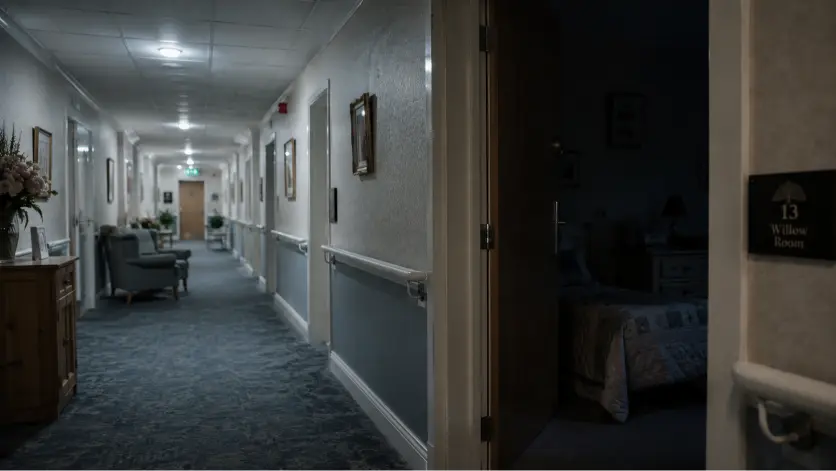
Most registered managers can describe the same moment. A resident is found on the floor during a routine check, and nobody can say for certain how long they’ve been there.
The fall might have been unavoidable. The hour that followed it wasn’t.
Long lies make a bad outcome worse. They lead to hospital admissions that might have been prevented, to conversations with families that are harder than they needed to be, and to safeguarding reviews built on gaps rather than facts.
Night shifts carry most of this. Fewer staff, more corridor, and a genuine limit to how often anyone can look in on a person without disturbing their sleep.
Care teams tell us the difference shows up in four places.
A fall is picked up in seconds and the alert reaches the right person on the right device, wherever they are in the building.
When something has happened, there's a clear record of when, and how long before someone arrived.
Fewer routine disturbances for residents who are sleeping well, and earlier awareness for those who aren't.
Response times, incidents and patterns are recorded as they happen, rather than reconstructed afterwards.
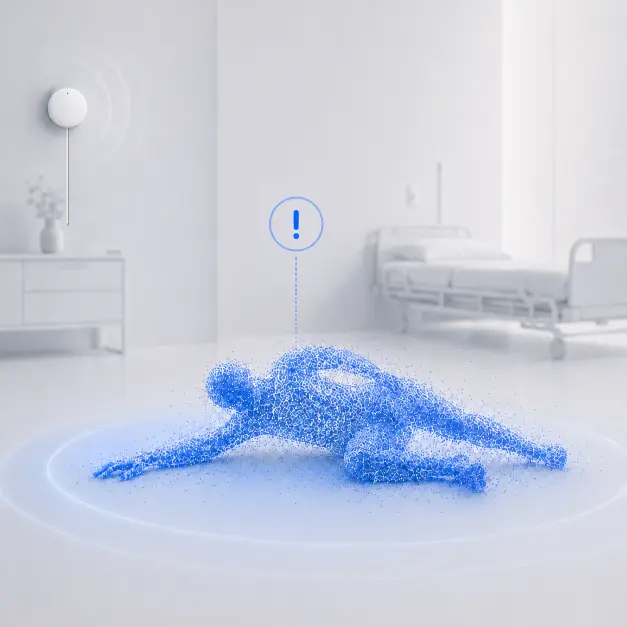
The sensor watches the shape of movement in a room rather than the person in it. When a fall happens, it recognises it and raises an alert straight away.
That includes the falls that traditional equipment misses: the slow slide from a chair, the controlled descent to the floor, the fall in a bathroom where a floor mat was never going to help.
Earlier awareness gives your team the one thing they can’t get back afterwards. Time.
Detection matters. Prevention matters more.
The system builds a quiet picture of how each person moves through their day and night. Not to watch them, but to notice when something changes.
A resident getting out of bed four times a night when they used to sleep through. Someone spending far longer sitting than they were a fortnight ago. A person walking with purpose at two in the morning when that’s new for them.
These are the signals your most experienced carers already pick up on. The difference is that the pattern is visible to everyone on the team, on every shift, and it’s there in black and white when you’re reviewing a care plan or discussing someone with the GP.
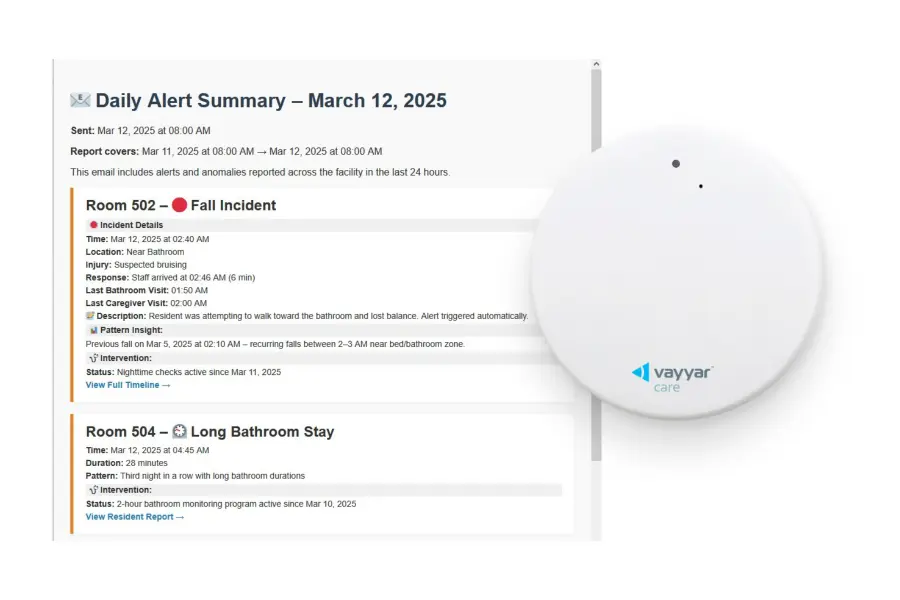
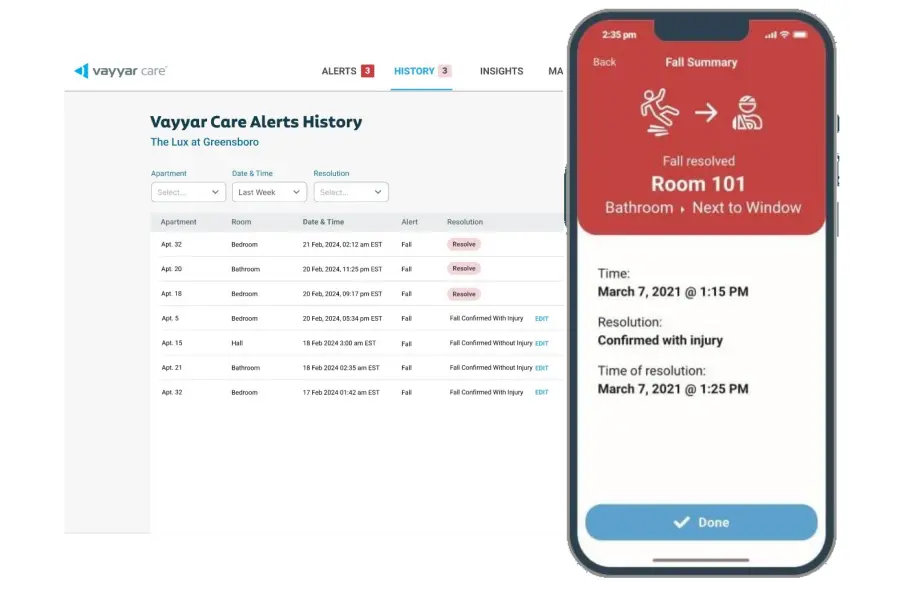
Every detected event is logged and time-stamped as it happens. Who was alerted, how quickly someone attended, and what the room looked like before and after.
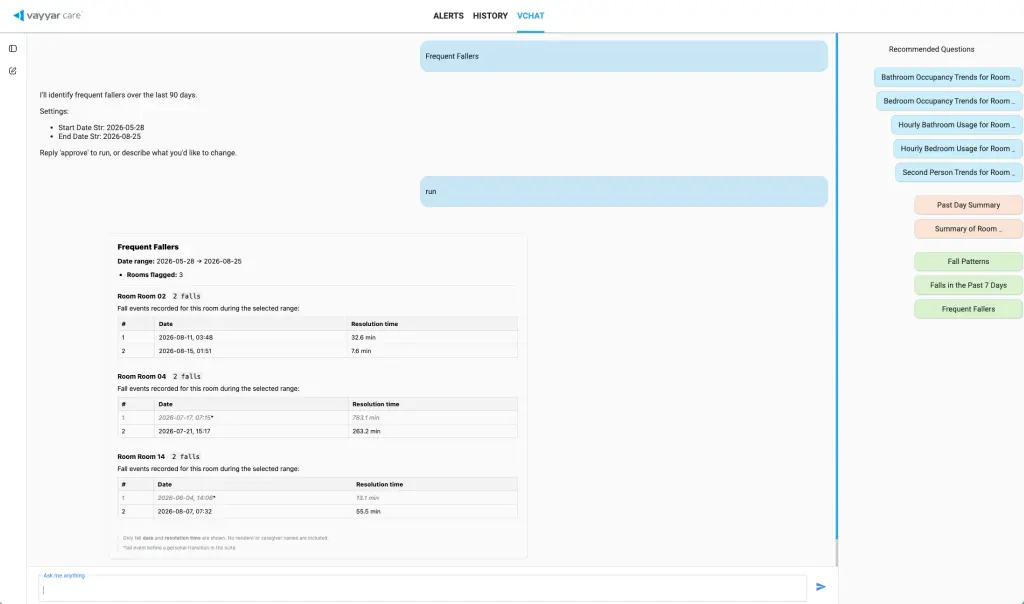
The slow part is usually the asking. Which rooms have had more than one fall in the last 90 days? How long did it take for someone to get there? Is it always the early hours?
Those questions can be put to the system in plain English, and the answer comes back in seconds, set out clearly enough to take straight into a governance meeting or a safeguarding review. No exports to build, no waiting on someone else to pull a report.
It stays private too. The answers show dates, rooms and response times. No names, no images, nothing that identifies a resident or a member of staff.
The aim isn’t more data. It’s less time spent proving what your team already did well.
There’s no camera and no microphone. There’s nothing recorded that anyone could look at and recognise a person by.
The sensor understands presence, position and movement. It doesn’t produce an image, and it can’t.
That distinction is what makes it usable in the places where risk is highest and privacy matters most. A bedroom. A bathroom. The rooms where a camera would never be appropriate and where a family would rightly object.
Residents keep their privacy. Your team gets the awareness they need. Nobody has to choose between the two.
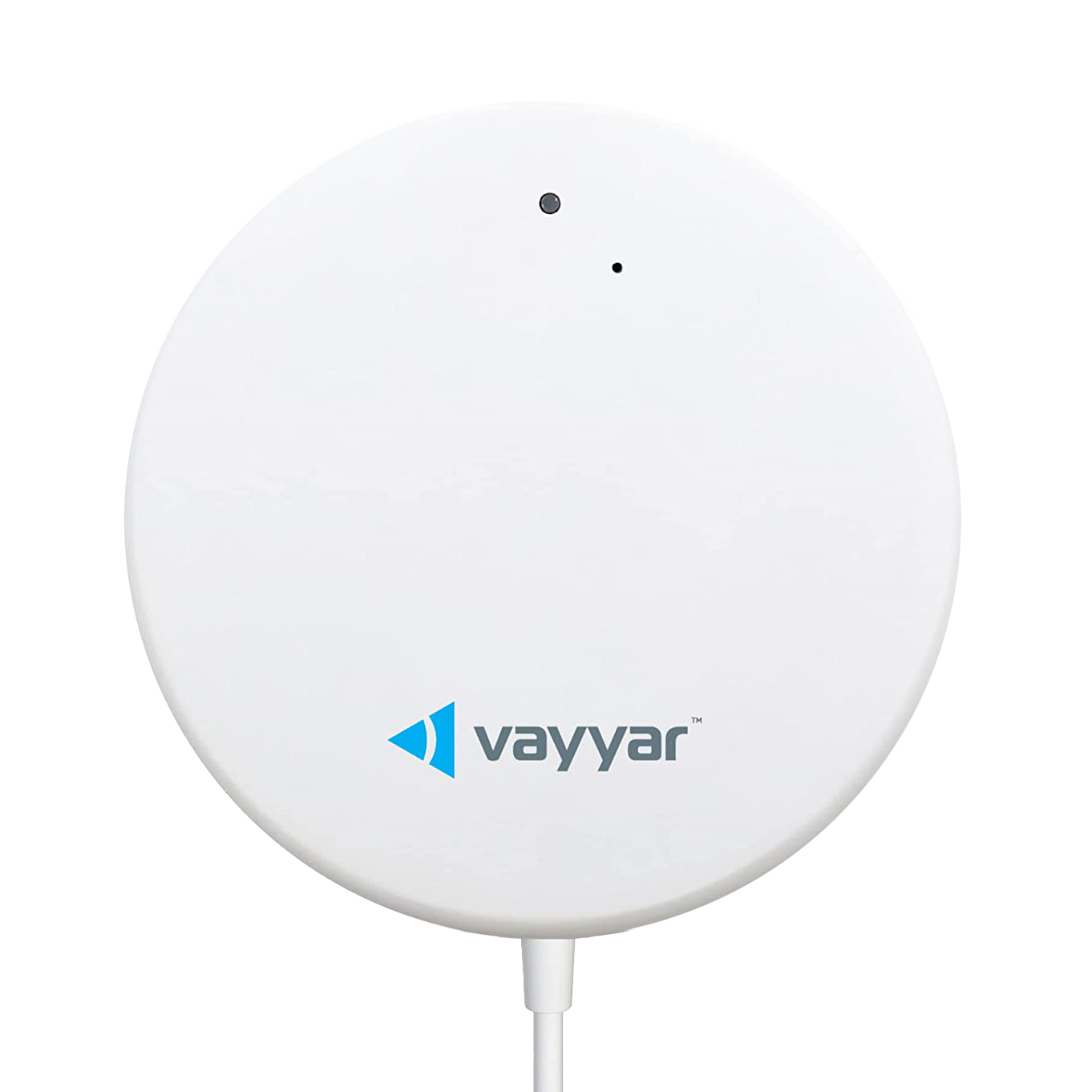
Sensing works best when it’s joined up with the systems your team already uses.
Alerts can route through Nursecall Messaging Service (NMS) so that everything reaches your staff in one place, on one device, in a consistent way. That matters more than it sounds. Alarm fatigue is real, and a team juggling three separate alerting systems will eventually stop reacting to all of them.
We’ll look at what you already have before we recommend anything. Sometimes the right answer is sensing in a small number of high-risk rooms rather than a whole home. We’ll tell you if that’s the case.
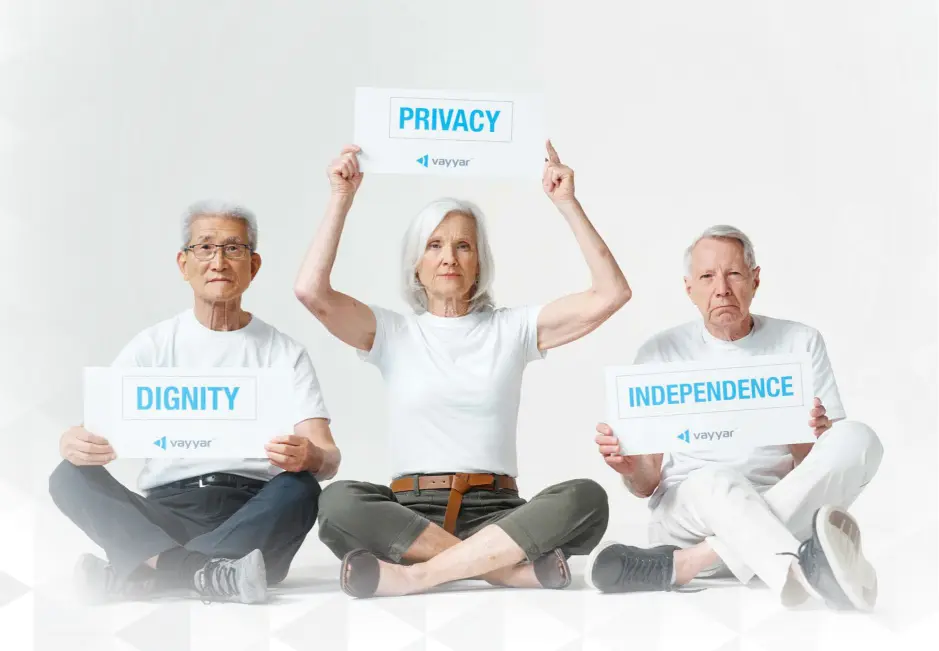
There’s no camera and no microphone. There’s nothing recorded that anyone could look at and recognise a person by.
The sensor understands presence, position and movement. It doesn’t produce an image, and it can’t.
That distinction is what makes it usable in the places where risk is highest and privacy matters most. A bedroom. A bathroom. The rooms where a camera would never be appropriate and where a family would rightly object.
Residents keep their privacy. Your team gets the awareness they need. Nobody has to choose between the two.
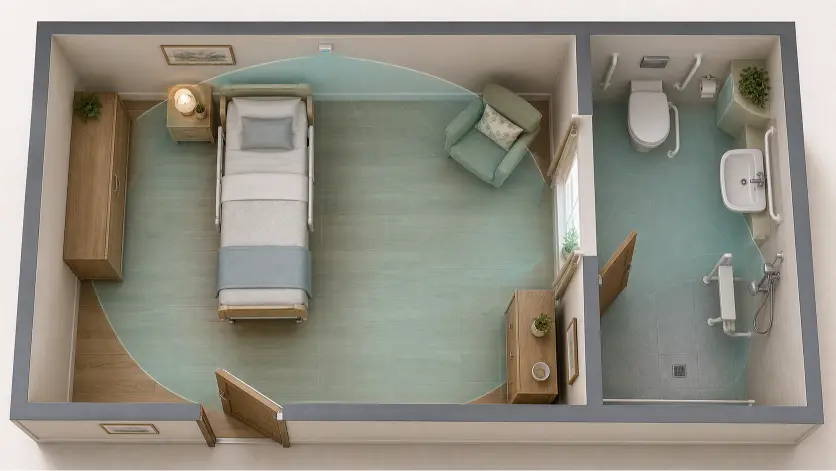
We survey each room before anything is installed, so coverage is right for the layout rather than guessed at. Installation is handled by our team, with minimal disruption to residents and no need for your staff to project manage it.
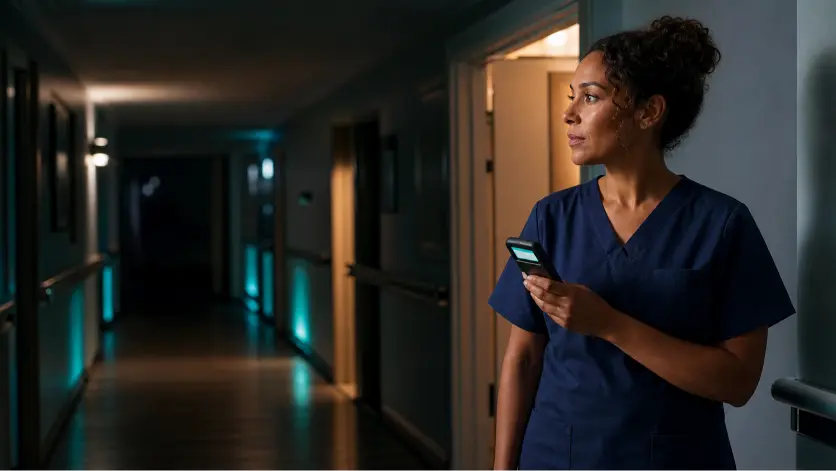
Not a single handover session, but time on the floor with the people who’ll actually use it, including night staff, who are usually the ones left out. We’ll help you identify a champion in each home and come back after go-live to see how it’s bedding in..
Legal, ethical and practical use in care environments.
Yes. It’s a least restrictive option by design. It’s passive, so it doesn’t rely on a person pressing a button, wearing a device or consenting to visual monitoring.
It supports decisions made in a person’s best interests by giving carers earlier insight into risk, without limiting their freedom or their privacy.
It’s built around data minimisation. There’s no image, video or audio recorded at any point. The system works from non-identifiable radar data indicating presence, position and status.
Data is encrypted and accessible only to authorised users. We’ll support your DPIA and can provide the technical detail your DPO will want to see.
In most cases, yes, and we’ll make that straightforward. We recommend documenting it as a proportionate, low-restriction safeguard, particularly for people who may lack capacity.
We provide templated wording and rationale you can adapt.
It supports evidence against several fundamental standards, including Regulation 9 (person-centred care), Regulation 12 (safe care and treatment), Regulation 13 (safeguarding) and Regulation 17 (good governance).
It won’t do the work for you, but it makes it considerably easier to show what your service does and how well it does it.
No. There’s no camera and no microphone. It senses movement and occupancy without producing any visual record.
It can highlight changes in behaviour that may point to distress, illness or an unmet need, which is particularly valuable for people who can’t easily tell you something is wrong.
It also means incidents are recorded consistently, which strengthens any review or investigation.
Onboarding, staff training and help with documentation, so it’s introduced transparently and in line with your governance framework.
That includes best practice for dementia care, night-time support and reporting.
Every home is different, so we cost it around your layout, your risk profile and how you’d like to phase it.
Where falls are actually happening in your homes, what your team currently does about them, and what's getting in the way.
We walk the building, look at the rooms that carry the most risk, and tell you honestly what coverage would make a difference.
Costed clearly, including hardware, installation, training and ongoing support, with options for a single wing or a whole home.
The most useful first conversation isn’t about sensors. It’s about where falls are happening, what your team currently does about them, and what’s getting in the way.
If sensing is the right answer, we’ll show you how it works. If it isn’t, we’ll say so.
We work with care home groups, family-run homes, housing and care providers, local authorities and ICB partners across the UK.