
Offensive or infectious? Continence waste streams explained for care homes
Tiger bag or orange bag? A plain-English guide to continence waste streams in care homes, and how to make segregation easier for your team.
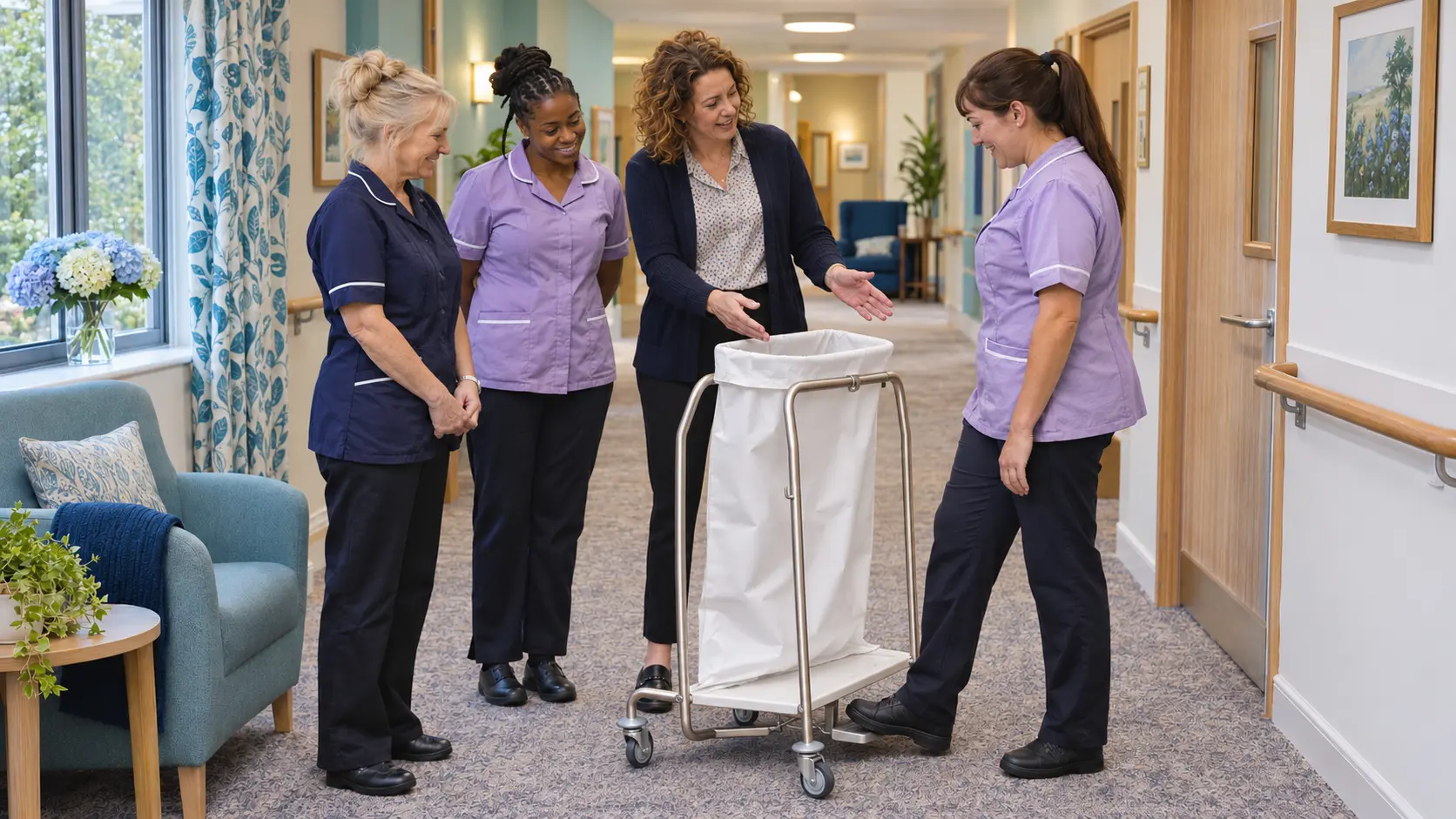
Tiger bag or orange bag? It’s a question that comes up on almost every care home unit, usually at the end of a pad change, often at night, and sometimes asked by someone on their first shift.
Getting it right matters. It affects your costs, your environmental impact, your compliance and, in a quieter way, the dignity of the people you support. Here’s a plain-English guide to how continence waste is classified, and how to make segregation easier for your team.
Try it in your home for four weeks
We loan the equipment, check in every week, and you decide at the end whether it’s right for your team.
Why it matters
Infectious waste needs specialist treatment, which costs more and uses more energy. Offensive waste doesn’t. When waste goes into the wrong stream, homes either pay more than they need to or risk sending infectious waste somewhere it shouldn’t go.
Clear segregation also makes life easier for staff. When everyone knows what goes where, there’s less hesitation, fewer mistakes and less waste handled twice.
What is offensive waste?
Offensive waste is waste that isn’t infectious but may contain body fluids and can be unpleasant in smell or appearance. In a care home, that typically includes incontinence pads, along with items such as gloves and aprons that haven’t been in contact with infectious body fluids.
Offensive waste goes in yellow and black striped bags, usually called tiger bags. It doesn’t need the same treatment as infectious waste. It’s sent to non-hazardous landfill or to energy recovery facilities.
What is infectious waste?
Infectious waste comes from someone with a known or suspected infection. In most care homes, it goes in orange bags, which are sent for alternative treatment before disposal. Yellow is used for infectious waste with an additional hazard, such as contamination with medicines or chemicals, which needs incineration.
The current edition of HTM 07-01 takes a risk-based approach. Waste should only be classed as infectious when it comes from someone with a known or suspected infection. That’s not a reason to drop your guard. It’s a reason to make sure staff understand how to assess the risk.
So where do incontinence pads go?
In most cases, used incontinence pads are offensive waste and go in tiger bags. They should go in orange bags when the resident has a known or suspected infection, or when your IPC lead or local policy says so, for example during an outbreak.
The important thing is that the decision is clear, agreed and easy to follow on every shift.
What HTM 07-01 says
HTM 07-01 is the national guidance on safe and sustainable management of healthcare waste. The current edition replaced the 2013 version and puts sustainability at its centre. It sets targets for how segregated healthcare waste should be managed, including 60% classed as offensive waste and 20% sent to alternative treatment.
It applies across the UK, although some nations have adapted it, so there can be differences in practice and colour coding. It’s worth checking the version that applies where you are.
Common pitfalls
- Defaulting to orange “to be safe”. It feels cautious, but it adds cost and environmental impact without improving safety.
- Bags left open on the unit. Whichever stream they’re in, open bags let odour into shared spaces.
- Unclear signage. If staff have to think about it at 3am, the system isn’t simple enough.
- Inconsistent practice between shifts. Agency and new staff often follow whatever they see others do.
- Overfilled bags. They’re harder to seal and more likely to split.
Practical steps that help
- Put the right bags where care happens, so the choice is made at the point of care, not later.
- Use simple visual guides at the bedside and in the sluice.
- Include waste segregation in induction for every new and agency staff member, including night staff.
- Audit regularly and share what you find with the team.
- Talk to your waste contractor. They can confirm exactly what they expect in each stream and how it should be labelled.
What it means for residents and families
Waste segregation can feel like a back-of-house issue, but residents and families notice the results. A home where bags are closed, corridors smell fresh and staff aren’t carrying waste past the lounge simply feels better cared for.
Getting the basics right, consistently, is one of the quieter ways a home shows respect for the people who live there.
Containing the waste, whatever the stream
Even when segregation is spot on, standard tiger and orange bags are porous. Odour escapes while they fill on the unit, while they’re carried through the home and while they wait at the bin store.
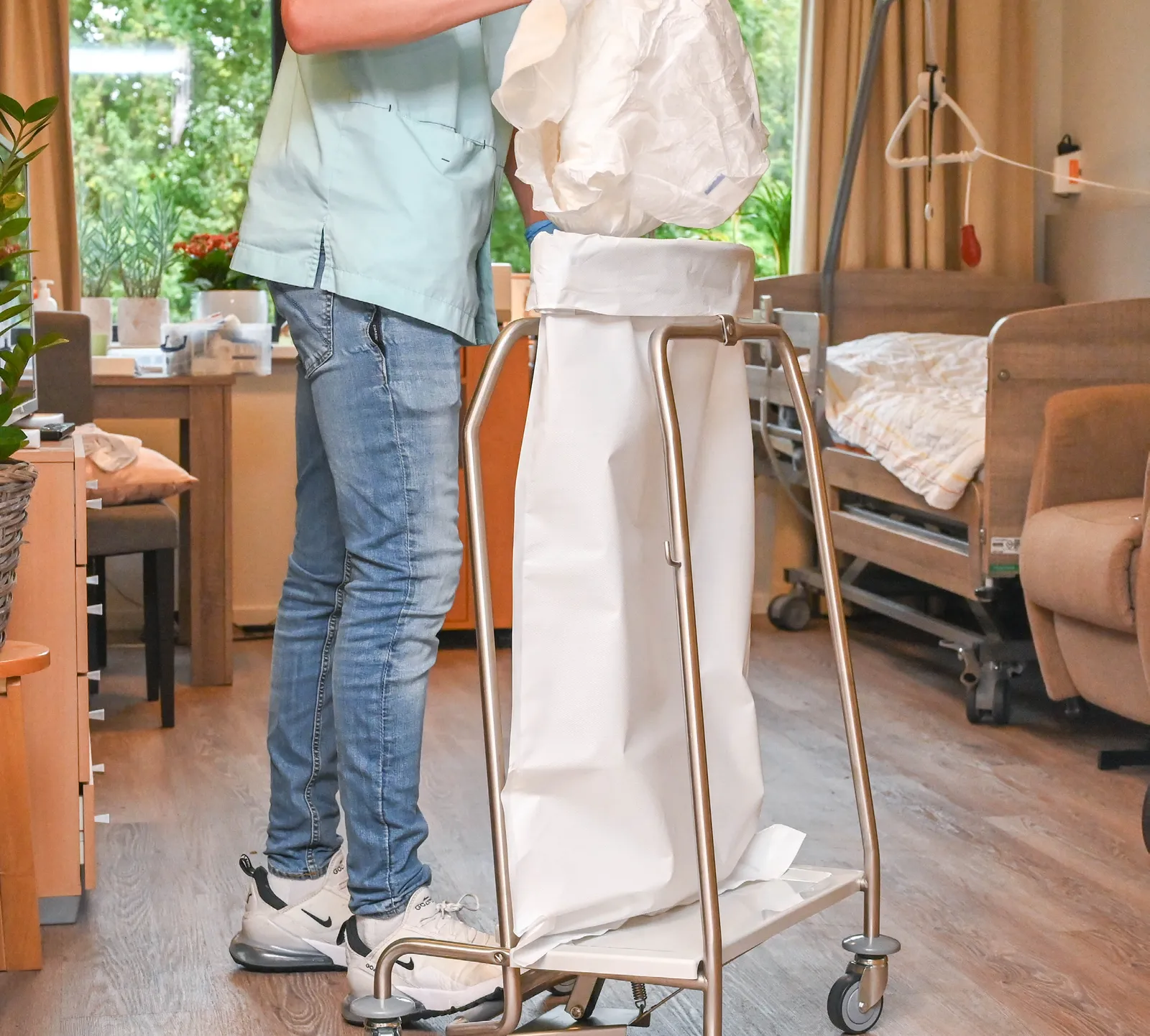
Less2Care Iso-Bags come in tiger and orange, so they fit the waste streams you already use, but they’re 100% odour, air and moisture tight. Used continence waste is collected in them at the point of care, then sealed before it leaves the unit. Your segregation and your waste contract stay the same. What changes is how well the waste is contained.
Questions care teams ask
What colour bag is used for offensive waste?
Offensive waste goes in yellow and black striped bags, usually called tiger bags.
Is offensive waste hazardous?
No. Offensive waste is classed as non-hazardous because it isn’t infectious, even though it may contain body fluids and be unpleasant in smell or appearance.
What’s the difference between clinical waste and offensive waste?
Clinical waste includes infectious waste, which needs specialist treatment before disposal and usually goes in orange bags. Offensive waste isn’t infectious, goes in tiger bags and doesn’t need the same treatment.
Do care homes without nursing need clinical waste collections?
Waste from care homes that don’t provide nursing care can be classified differently from nursing home waste. But offensive and infectious waste still need to be kept separate and handled safely. Your waste contractor can confirm what applies to your home.
Can we use tiger bags for all incontinence pads?
Not always. Most used incontinence pads are offensive waste and go in tiger bags. But pads from a resident with a known or suspected infection should go in orange bags, or follow your IPC lead’s advice.
Talk it through with us
If you’d like to talk about how continence waste moves through your home, and whether Less2Care could help, we’re always happy to start with a conversation.
This article is general guidance. Always follow your own infection prevention and control policy, your waste contractor’s advice and the version of HTM 07-01 that applies to you.