Connected care. Enriching Lives
- Fall detection, without cameras
Camera-free fall detection for care homes
There’s more than one way to help residents stay safe from falls. This guide walks through the options, so you can choose the approach that fits your home and the people in it.
- No cameras. No wearables. Privacy-first by design
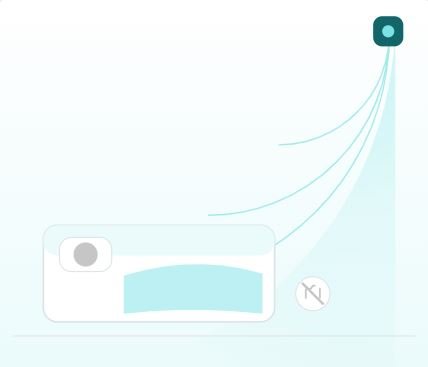
- One sensor, corner-mounted. Whole-room awareness, no camera in the room.
- Why now
Why more providers are reviewing fall detection
Falls remain one of the hardest risks to manage well, especially overnight. The pressure isn’t new, but the expectations around evidence, response, and dignity keep rising.
Unwitnessed falls
The falls no one sees are often the ones that cause the most harm. Knowing sooner changes what happens next.
Long lies
Time on the floor after a fall affects recovery. Faster awareness means faster help and better outcomes.
Overnight reassurance
Night staff carry a lot with fewer eyes on the floor. The right support helps them respond with confidence.
Better evidence
Clearer records of events and response help with oversight, safeguarding, and inspection conversations.
Protecting dignity
Residents deserve safety without feeling watched. How monitoring is done matters as much as whether it's there.
Staffing pressure
Every home is stretched. Technology should ease the load on teams, not add another thing to manage.
- The options
Not all fall detection works the same way
Different technologies solve the problem in different ways, each with trade-offs. Here’s a fair, plain-English look at the main approaches, so you can weigh what suits your residents.
Camera-based systems
Use a video feed to spot movement or falls. Powerful, but placing a camera in a bedroom or bathroom raises real questions about privacy and dignity.
Wearables and pendants
Worn or carried by the resident. Effective when used, but they rely on the person wearing them, keeping them charged, and being able to press for help.
Motion and bed sensors
Detect movement or bed exits in a set spot. Useful for specific triggers, though coverage is often limited to one area of the room.
mmWave sensing
A single corner-mounted sensor reads movement across the whole room using radio waves, with no camera and nothing to wear. This is the approach behind Silver Shield. Spark Care's approach
- Our approach
Why Spark Care chose mmWave
We looked for a way to support safer care that respects the person first. mmWave sensing lets a room stay aware without a camera ever being in it, and without asking residents to wear or do anything at all.
- No cameras and no wearables. Privacy is built in, not added on.
- Works in complete darkness. Overnight monitoring without disturbing sleep or switching on lights.
- Sees through bedding. Awareness continues even when someone is under the covers.
- Passive by design. Nothing for the resident to remember, wear, charge, or press.
- Respiratory rate monitoring. A gentle extra layer of insight into how someone is resting.
Fewer engineer visits, faster fixes, and a network your team can trust.
- In everyday care
What it means on the floor
The technology only matters if it helps people. Here’s what earlier awareness looks like in the run of a normal shift.
Earlier awareness
Teams know about a fall or a change sooner, rather than at the next check.
Faster response
Quicker help when it counts, which can make a real difference to recovery.
Fewer long lies
Less time on the floor after an unwitnessed fall, day or night.
Calmer nights
Quieter overnight support that watches over the room without waking it.
Support for staff
Confidence for teams who can't be in every room at once.
Reassured families
A clear, honest answer when families ask how their loved one is kept safe.
- In real homes
What this looks like in practice
Not claims, but real homes putting privacy-first monitoring to work. Read the full stories whenever you’re ready.
The Maltings Care Home
How clearer alert logs and response data gave the home a factual, timestamped account of events, supporting stronger oversight and calmer conversations with families and the regulator. Read the case study →
Saxonwood Care Home
A look at how proactive monitoring supported the team day to day, helping staff respond earlier to falls and feel more confident between checks. Read the case study →
- Side by side
An honest comparison
A simple view of how the main approaches differ. Every method has its place, and the right choice depends on your residents and your home.
| What matters to you | Camera systems | Wearables | mmWave (Silver Shield) |
|---|---|---|---|
| No camera in the room | — | ✓ | ✓ |
| Nothing for the resident to wear or charge | ✓ | — | ✓ |
| Works in complete darkness | varies | ✓ | ✓ |
| Continues to work under bedding | — | ✓ | ✓ |
| No action needed by the resident | ✓ | — | ✓ |
| Whole-room coverage from one point | varies | n/a | ✓ |
| Privacy-first by design | — | partly | ✓ |
- Approaches vary by supplier, so treat this as a general guide rather than a verdict on any one product. We're happy to talk through where each option genuinely fits.
- Free guide
Download the fall detection comparison guide
A short, practical read for anyone weighing up how to support residents at risk of falls. No jargon, no hard sell.
- A plain comparison of the main monitoring approaches
- A plain comparison of the main monitoring approaches
- How privacy-first monitoring works in a real care setting
Get your copy
We'll email the guide straight to you.
- We'll only use your details to send the guide and follow up if it's helpful. You can ask us to stop at any time.
- Who we are
A partner who knows care, not just technology
Spark Care helps care providers introduce technology that fits how care really works. We start with the people and the problem, then find the right tools, honestly.
20 +Years in care
Rooted in real care home governance, operations, and the day-to-day realities of the floor.
UK Based and supported
A UK team you can actually reach, from first conversation through to everyday use.
✓ Honest advice
We'll tell you where something fits and where it doesn't. No pressure, no overclaiming.
↔ Connected thinking
We look at how tools work together across your home, not as one more isolated gadget.
- Good questions
Frequently asked
How does mmWave fall detection work?
A small sensor sends out low-power radio waves and reads how they bounce back. That lets it sense movement, position, and stillness across a room, so it can recognise a fall and a lack of expected movement, all without a camera or anything worn by the resident.A small sensor sends out low-power radio waves and reads how they bounce back. That lets it sense movement, position, and stillness across a room, so it can recognise a fall and a lack of expected movement, all without a camera or anything worn by the resident.
Does it use any cameras?
No. There is no camera and no video feed at any point. That’s the heart of the approach. The room stays monitored, but no images are ever captured, which protects privacy and dignity.
Does it work in the dark?
Yes. Because it doesn’t rely on light or a visual image, it works just as well in complete darkness. That makes it well suited to overnight monitoring without disturbing sleep.
Can it detect a fall if someone is under the covers?
Yes. The sensing continues through bedding, so awareness isn’t lost when a resident is tucked in or resting under the covers.
How much of a room does one sensor cover?
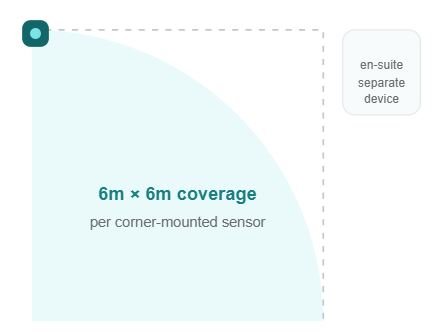
A single sensor covers a 6m x 6m area and is mounted in the ceiling corner of the room. Larger spaces or en-suite bathrooms need a separate device to keep full coverage.
Is it difficult to install?
No major building work is needed. The sensor mounts discreetly in a corner, and our team supports you through setup and getting your staff comfortable using it. We’re with you on the practical side, not just the supply.
What does it actually tell staff?
It supports earlier awareness of falls and changes in movement, and it can monitor respiratory rate as a gentle extra layer of insight into how someone is resting. It’s there to support your team’s judgement, never to replace it.
- Read more
Want to go deeper first?
The technology only matters if it helps people. Here’s what earlier awareness looks like in the run of a normal shift.
Complete guide
The complete guide to fall detection Our full, honest guide to falls risk, unwitnessed falls, long lies, and how modern monitoring helps. A proper deep dive. Read the full guide →
Product
Silver Shield fall detection A closer look at how privacy-first, camera-free monitoring supports earlier response and safer care. Explore Silver Shield →
Residential care
Silver Shield for residential care How the approach fits the realities of a residential home, overnight and around the clock. See residential care →
Care at home
Silver Shield for care at home Camera-free monitoring that supports independence and reassurance in people's own homes. See care at home →
Case study
The Maltings Care Home Stronger evidence and clearer oversight after a serious incident, told through real response data. Read the case study →
About us
How Spark Care works with you
Our people-first approach to introducing care technology that actually fits how care works.
Meet Spark Care →
- Next step
See it for yourself
Book a short, no-pressure demonstration and we’ll show you how camera-free monitoring works in a real care setting, and talk honestly about whether it fits your home.