
Home » The Complete Guide to Fall Detection in Care Homes
Everything care home owners, registered managers, and quality leads need to know about falls risk, unwitnessed falls, and how modern monitoring can help teams respond earlier, with dignity protected throughout.
Falls are one of the most common, most serious, and most preventable risks in care. Almost every registered manager, clinical lead, and family member touched by care has a fall story. Some are minor. Some change a life. Some are never witnessed at all, which is often the hardest part to sit with.
This guide brings together what we’ve learned from years spent working alongside care providers on falls, risk, and proactive monitoring. It’s written for care home owners, registered managers, operations directors, quality and compliance leads, and anyone responsible for keeping people safe while protecting their dignity and independence.
It’s a long read, because falls deserve more than a surface-level answer. Falls sit at the crossing point of clinical risk, staffing reality, regulatory expectation, and family trust, and any guide that treats them as a single, simple problem isn’t being honest about how care actually works. Use the contents on the left to jump to what matters most to you right now, and come back to the rest when it’s useful.
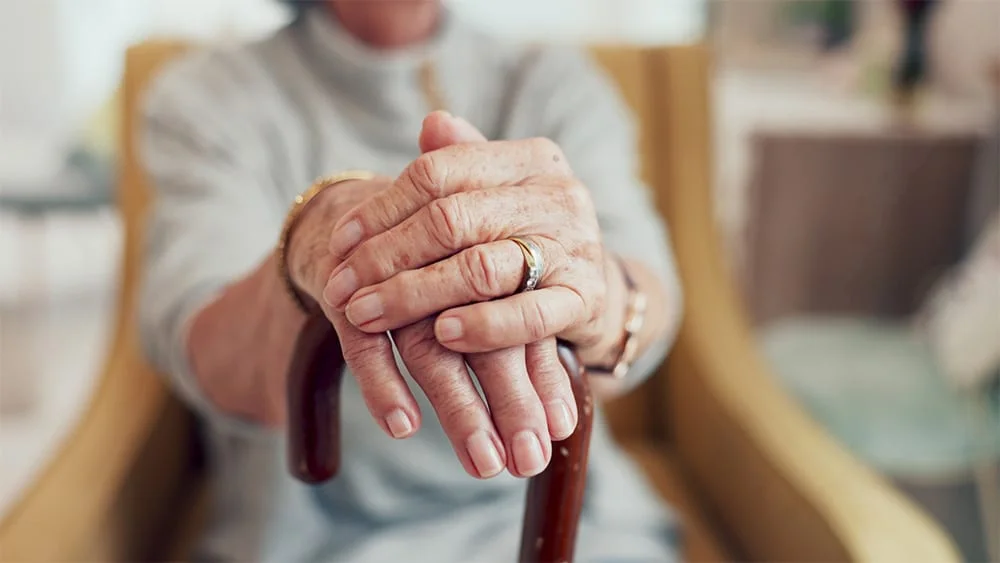
Falls sit at the centre of almost every conversation about risk in care. They’re the single biggest cause of injury-related hospital admission among older people in the UK, and care homes are, by definition, home to some of the people most likely to fall.
That’s not a criticism of care homes. It’s simply the reality of caring for people who are often frail, living with dementia, managing multiple health conditions, or recovering from illness. Falls risk isn’t a failure of care. It’s a feature of the population care homes support.
Falls among older people are common, and they become more common with age, frailty, and cognitive decline. Around one in three people over 65 fall at least once a year, and that figure rises for people living in care settings, where multiple risk factors, including mobility issues, medication side effects, and cognitive impairment, tend to cluster together.
For a typical residential or nursing home, this isn’t a rare event. It’s a near-daily part of managing risk. Multiply that across a group of homes, and falls become one of the largest single categories of incident, safeguarding referral, and family concern that operators deal with.
People over 65 fall at least once a year
Cause of injury-related hospital admission in older people
Reality of falls risk in most residential and nursing homes
Falls carry a real financial cost, and it lands in more than one place. There’s the cost of hospital admission, the cost of increased care needs following a fall, and staff time, because a serious fall often means an ambulance call, paperwork, family communication, and sometimes a safeguarding process, all of which pull staff away from the floor.
There’s also the less visible cost of insurance. Providers with a higher rate of serious falls incidents can see this reflected in premiums, and repeated serious incidents can affect a provider’s ability to secure cover on favourable terms at all. For private operators, there’s reputational cost too. A serious fall, especially one that leads to a safeguarding investigation, can affect occupancy and referrals in ways that take a long time to rebuild.
For a typical residential or nursing home, this isn’t a rare event. It’s a near-daily part of managing risk. Multiply that across a group of homes, and falls become one of the largest single categories of incident, safeguarding referral, and family concern that operators deal with.
Behind every statistic is a person, and a fall is rarely just physical. For the resident, a fall can mean pain, a hospital stay away from familiar surroundings, and for many older people, a loss of confidence that outlasts the physical injury. It’s common to see someone who was walking independently before a fall become far more hesitant afterwards, even once they’ve physically recovered.
For families, a fall, particularly one that wasn’t witnessed, raises hard questions. How long were they on the floor? Were they in pain? Why wasn’t anyone there? These questions aren’t really about blame. They’re about wanting reassurance that their relative is safe even in the moments no one is physically present.
For staff, falls carry their own weight. Most people who work in care do so because they care, and being unable to prevent a fall, or not knowing it happened until they find someone on the floor, is genuinely distressing. Staff carry that responsibility home with them.
There’s also the less visible cost of insurance. Providers with a higher rate of serious falls incidents can see this reflected in premiums, and repeated serious incidents can affect a provider’s ability to secure cover on favourable terms at all. For private operators, there’s reputational cost too. A serious fall, especially one that leads to a safeguarding investigation, can affect occupancy and referrals in ways that take a long time to rebuild.
For a typical residential or nursing home, this isn’t a rare event. It’s a near-daily part of managing risk. Multiply that across a group of homes, and falls become one of the largest single categories of incident, safeguarding referral, and family concern that operators deal with.
Falls sit squarely within CQC’s focus on safety, and rightly so. Inspectors want to see that a provider understands its falls risk, has proportionate measures in place to reduce it, responds appropriately when falls happen, and learns from incidents over time.
Where things go wrong for providers isn’t usually the fall itself, since falls are, to some extent, an inevitable part of caring for a frail population. It’s the response. Was the resident found in good time? Was the incident properly recorded? Is there a clear pattern of learning and improvement, or does the same type of incident keep recurring without any change in practice?
Most of the tools care homes have relied on for decades were designed for a different time, and for a workforce that isn’t always available in the numbers it once was. They’re not without value, but on their own, they leave real gaps.
Only alert once a resident has already left the position being monitored. By the time the alert sounds, the fall may already be in progress or may already have happened. Mats can also be moved, avoided, or simply missed.
A lot can happen in fifty-nine minutes. A resident who falls two minutes after a check might not be found for almost an hour. Checks also disturb residents who are sleeping well.
Depend on the resident wearing them, consistently, and having them charged. People living with dementia often find wearables uncomfortable or unfamiliar and will remove them.
Solve the visibility problem but raise serious dignity and privacy concerns for residents and staff, and can create data protection challenges many providers are rightly cautious about.
None of the above would matter as much if care homes had unlimited staff to carry out constant, individualised observation. But staffing pressure is one of the defining realities of the sector right now. This is the real gap that fall detection technology is designed to fill. Not to replace staff, and not to reduce staffing levels, but to give the staff who are there better information, sooner, so their time and attention can go where it’s needed most.
Not all falls look the same, and a system that only detects one type of fall leaves significant blind spots. Understanding the different patterns matters, both for prevention and for choosing the right kind of monitoring.
Sudden, often from standing or walking, typically involving a loss of balance, a trip, or a sudden medical event such as a faint or stroke. Usually the easiest to detect.
Gradual, often as someone loses strength while holding onto furniture or lowering themselves in a controlled but unsafe way. Harder for people and technology to spot.
A resident gradually slips forward or sideways out of a chair, often due to poor positioning or fatigue. Easy to miss during a routine check if the resident is asleep.
A resident attempting to get out of bed unsupported is at high risk of falling in the process. Early detection of bed exit intent gives staff the best chance of reaching them in time.
Bathroom floors are hard, wet, and unforgiving, and bathrooms are one of the most private spaces in a care setting, exactly where privacy-first monitoring matters most.
Combine lower staffing ratios, reduced lighting, and disorientation. A resident who falls at 3am may not be found until the next scheduled check.
An unwitnessed fall isn’t simply a fall that nobody saw. It carries a distinct set of consequences that go well beyond the physical injury itself.
In a connected system, an alert isn’t the end of the story, it’s the start of a chain. When something is detected, whether that’s a fall, a bed exit, or a resident who hasn’t moved for longer than expected, the alert needs to reach the right person, on the right device, within seconds. What matters here is relevance as much as speed. Staff who are bombarded with unnecessary alerts stop trusting them, which is its own kind of risk.
Being found some time after a fall, frightened, in pain, and unsure how long they’ve been there, is a deeply distressing experience for a resident, and can lead to lasting anxiety and a fear of being alone.
Unwitnessed falls often trigger a safeguarding referral, and sometimes a coroner’s inquiry. Providers need to be able to answer clear questions about when a resident was last checked and how quickly the fall was identified.
Unwitnessed falls often trigger a safeguarding referral, and sometimes a coroner’s inquiry. Providers need to be able to answer clear questions about when a resident was last checked and how quickly the fall was identified.
Families who learn their relative was on the floor for an unknown period of time before being found often struggle to regain full confidence in a home, even after a thorough explanation.
The technology behind proactive fall detection has moved on considerably from the pressure mats and pendant alarms of a decade ago. Here’s what actually sits behind a modern system.
mmWave, or millimetre wave, sensing works by sending out very low-power radio waves and reading how they bounce back. It can detect movement, posture, and position in a room without capturing any image or video at all. This means monitoring can extend into bedrooms and bathrooms, the spaces where the most serious falls happen and where privacy matters most, without compromising dignity.
Good fall detection technology is built around privacy from the ground up, not as an afterthought. No camera, no image, no audio recording. What's captured is movement and positional data only, processed to identify patterns like a fall, a bed exit, or a prolonged period without movement.
The raw sensor data on its own isn't especially useful. What makes it valuable is the layer of intelligence that interprets it, recognising the difference between a fast fall, a slow fall, a chair slide, and someone simply bending down. Good systems are trained to reduce false alarms while still catching genuine risk early.
When a genuine event is detected, the system needs to alert the right person, quickly, in a way that fits into existing workflows. This usually means integration with handheld devices or nurse call systems already in use, so staff aren't required to learn or monitor a separate platform.
The most effective fall detection sits within a wider, connected approach to care. Integration with nurse call, care planning, and incident reporting means what's detected doesn't just trigger an alert in the moment, it also becomes part of the evidence base a home can draw on for care planning, safeguarding, and inspection readiness.
Everything on this page describes what good fall detection should do. If you'd like to see how it comes together in a real care setting, our fall detection, fall prevention and wellbeing sensing is built around exactly these principles, with support to get it working properly on the floor.
If you’re weighing up options, a handful of questions will tell you far more than a sales conversation will.
How does the system distinguish between different types of movement, and what evidence sits behind the accuracy claims?
What data is captured, how is it processed, and are any images or recordings ever generated?
What training will staff need, and does it fit into tools they already use?
What evidence does the system produce after the fact, for incident review and CQC evidence?
What happens when something goes wrong, technically or clinically, and how quickly is it resolved?
What real, honest impact has it had for providers already using it, beyond incident numbers alone?
How our sensing works. We want to be upfront here: this section isn’t a sales pitch. It’s an honest explanation of what Spark Care fall detection, fall prevention and wellbeing sensing, powered by Vayyar, actually does and how it fits into everything covered above, so you can judge for yourself whether it’s relevant to your setting.
It’s a privacy-first monitoring approach built on mmWave sensing from Vayyar. It’s designed to help care teams identify risk earlier and respond faster, without cameras, without wearables, and without residents needing to do anything differently in their daily routine.
It’s built to detect the different patterns of falls covered earlier in this guide, including fast falls, slow falls, chair slides, and bed exits, and to flag them to staff quickly through the tools they already use day to day. Because it doesn’t rely on a resident wearing or remembering anything, it works consistently for people living with dementia, and in bathrooms and bedrooms where dignity matters most.
We’d encourage you to ask us the same questions listed in the buying section above. We’d rather earn your confidence through honest answers than a polished pitch.
No pressure, no sales push. Just an honest conversation about your falls data and what might help.
If you decide to move forward with a system, a little preparation makes a real difference to how smoothly it beds in.
Look back over recent incident reports and ask where your falls are actually happening. This helps prioritise which rooms and areas matter most, rather than trying to cover everything at once.
Frontline carers and nurses are the ones who'll be acting on alerts every day, and their buy-in matters more than any technical specification. Explain what the system does and doesn't do, particularly around privacy.
A short, honest explanation goes a long way. Most families respond well once they understand there's no camera involved and the aim is earlier, safer response, not surveillance.
Providers who see the best results tend to be the ones who review early data together as a team, ask questions, and refine how they respond as they go.
It’s one thing to describe how this technology works. It’s another to see what it actually changes day to day. These examples reflect the kind of outcomes we see consistently across homes using proactive monitoring, drawn from real deployment patterns.
A home with a number of residents at high risk of unwitnessed falls introduced monitoring across bedrooms overnight. Staff began receiving early alerts on bed exit attempts, giving them time to reach residents before they were unsupported and on their feet. Night staff described feeling more confident moving between rooms, knowing they'd be alerted to genuine risk rather than relying solely on hourly rounds that disturbed settled residents.
Following a serious incident, a provider wanted to demonstrate clear oversight and a genuine pattern of learning. Detailed alert logs and response time data gave the home a factual, timestamped account of exactly what happened, supporting a much more straightforward conversation with both the family and the regulator.
A multi-site operator piloted monitoring in homes with the highest reported rate of unwitnessed falls. Over time, staff were able to identify and respond to falls significantly faster than before, giving operations and quality teams a clearer, evidenced picture of where risk was concentrated across the estate.
We’re always happy to talk through real examples relevant to your setting in more detail, including the practicalities of rollout, staff training, and what to expect in the first few months. You can also read our full case study on The Maltings Care Home and our case study on Saxonwood Care Home.
No. It’s designed to support staff, not replace them. It gives care teams earlier information so their time and attention can go where it’s needed most, particularly in homes where staffing pressure makes constant individual observation impossible.
Pendant alarms rely on the resident pressing a button or wearing the device correctly. Sensor-based monitoring works continuously in the background, without needing the resident to do anything, which makes it far more reliable for people living with dementia or reduced mobility.
No. Privacy-first systems like Vayyar Care use mmWave sensing, which detects movement and posture without capturing any image or video.
Yes, and this is one of the areas where it adds the most value, because bathroom falls are common, high-risk, and traditionally very hard to monitor without compromising privacy.
Because there’s no camera, no wearable, and nothing residents need to interact with, most residents and families find it far less intrusive than alternatives such as cameras or frequent physical checks.
Yes. Because it doesn’t rely on the resident wearing or operating anything, it’s particularly well suited to residents who may resist or forget wearable devices.
Alerts are typically delivered within seconds of a detected event, through the devices and workflows staff already use.
Good systems are built to reduce false alarms through intelligent movement recognition, distinguishing genuine risk from ordinary activity. No system is completely immune to occasional false alerts, but the goal is to keep them low enough that staff can trust and act on what they receive.
It can reduce the need for disruptive physical checks, particularly overnight, while actually improving oversight, since continuous monitoring can identify risk between scheduled checks rather than only at fixed intervals.
Yes. No images or recordings are captured, and positional data is processed and stored securely in line with data protection requirements.
It provides clear, timestamped evidence of when events occurred and how quickly staff responded, which supports stronger evidence around safety, oversight, and learning from incidents.
Yes. Detailed logs give an accurate, factual account of what happened, which can be invaluable in safeguarding reviews and family conversations following an incident.
This varies by home size and layout, but most installations are completed with minimal disruption to residents and daily routines. We’ll always talk through timelines specific to your setting.
No. Systems are designed to integrate with tools and workflows staff already use, so training is typically straightforward and focused on how to respond to alerts rather than how to operate new technology.
Most providers start with bedrooms and bathrooms, where the highest-risk falls tend to occur, particularly overnight.
Yes, coverage can extend to lounges, corridors, and other communal spaces depending on the home’s specific risk profile and priorities.
Yes. Continuous monitoring means a resident who has fallen and remains on the floor will be identified even if the fall itself wasn’t caught at the exact moment it occurred.
By detecting falls and extended periods without expected movement quickly, response time is significantly reduced compared with relying on scheduled checks alone.
It’s designed to work alongside your existing staffing model, giving your team better information rather than requiring a change to staffing numbers or ratios.
Fast falls involve a rapid change in position and are generally easier to detect. Slow falls, such as a resident gradually sliding down a wall or out of a chair, require more nuanced movement recognition, which is why the underlying intelligence behind a system matters so much.
No. It supports and strengthens existing falls risk assessments and care planning by providing real evidence of patterns and events, rather than replacing clinical judgement.
Many families find real reassurance in knowing their relative is being monitored continuously and with dignity, particularly overnight and in private spaces like bathrooms.
Data can support longer-term trend analysis, helping providers identify patterns in falls risk across individuals, rooms, or time periods, which supports more proactive care planning.
Yes. The underlying risks around unwitnessed falls, long lies, and night-time safety apply across residential and nursing care, and monitoring can be tailored to the specific needs of each setting.
It’s designed to work with existing nurse call and communication systems, including Charis and the Nursecall Messaging Service (NMS), so alerts reach staff through tools they already rely on.
Ongoing technical and clinical support is available beyond installation, including help interpreting data, refining coverage, and supporting staff as they build confidence with the system.
Providers with clear, evidenced falls management processes, supported by accurate incident data, are often better placed in conversations with insurers than those relying on incomplete manual records.Ongoing technical and clinical support is available beyond installation, including help interpreting data, refining coverage, and supporting staff as they build confidence with the system.
If unwitnessed falls, night-time risk, or long lies are a recurring concern in your incident data, or if you’re relying heavily on physical checks and wearables that aren’t consistently effective, it’s very likely worth a conversation.
The best starting point is usually an honest conversation about your specific falls data, risk profile, and priorities, so any recommendation is based on your actual situation rather than a generic pitch.
Falls will always be part of caring for an older and more vulnerable population. What’s changed is how early we can see risk coming, and how quickly we can respond when something happens.
If you’d like to talk through your own falls data, risk areas, or current approach, we’re always happy to have an honest, no-pressure conversation about what might help.