
Iso-Pads: bedpan, commode and urinal liners
Containing waste from the very first moment
Single-use liners with a built-in absorbent pad, so waste from bedpans, commodes and urinals is contained before anything is moved.
Dignity starts before anything is moved
For residents who use a bedpan, commode or urinal, what happens just after care matters as much as the care itself. Emptying, rinsing and carrying open containers to the sluice is where spills, splashes and odour tend to happen.
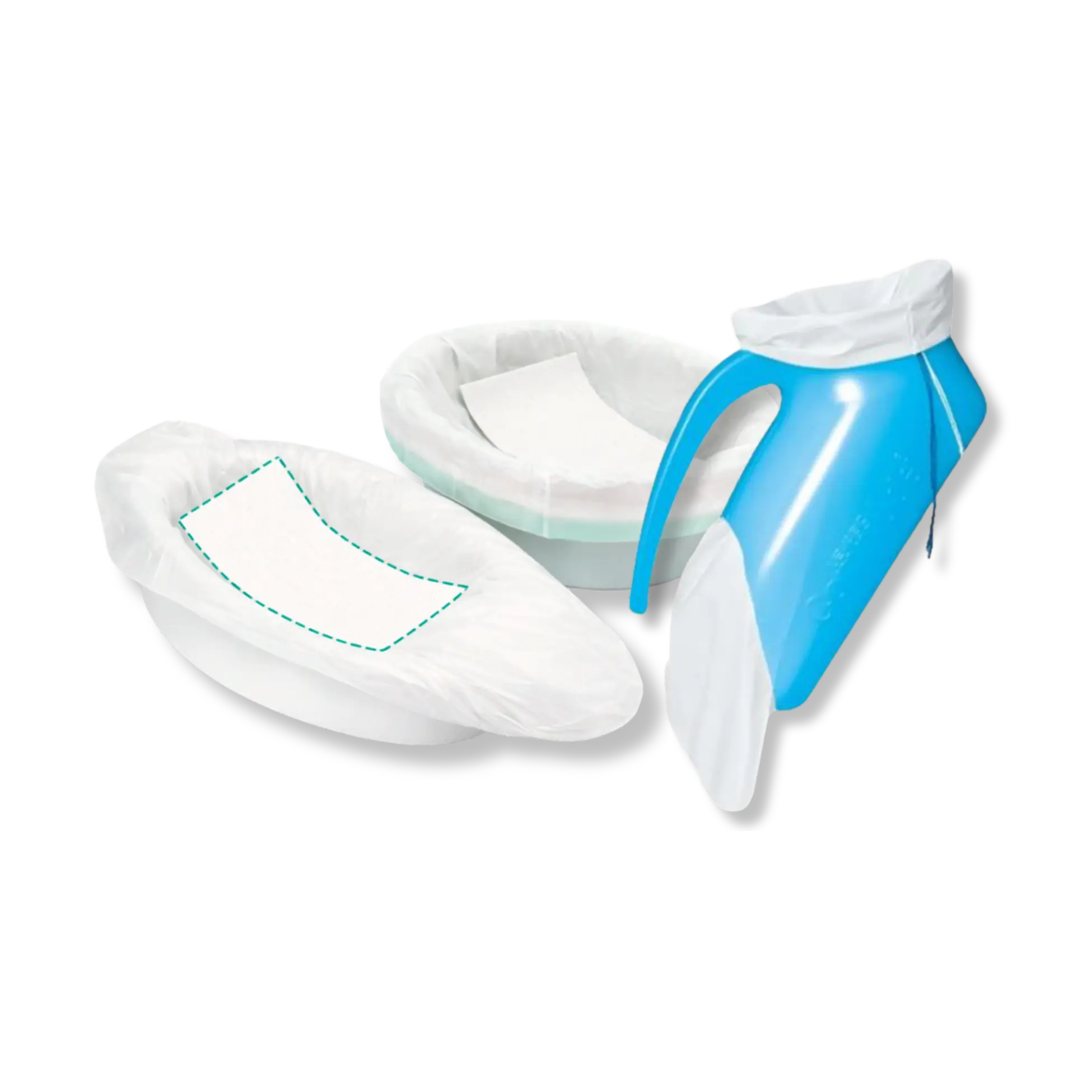
Iso-Pads are single-use liners with a built-in absorbent pad. The liner fits over the bedpan, commode pan or urinal. The pad gets to work straight away, turning liquid into gel, so there’s less risk of spills and less odour right from the start.
When care is finished, the liner is closed with its drawstring and goes straight into the Iso-Safe, to be sealed away with everything else. Nothing to empty, and nothing carried open through the home.
Why it matters for your team
Less time at the sluice and less direct contact with bodily fluids. It also gives every shift one consistent routine, which supports good infection prevention practice.
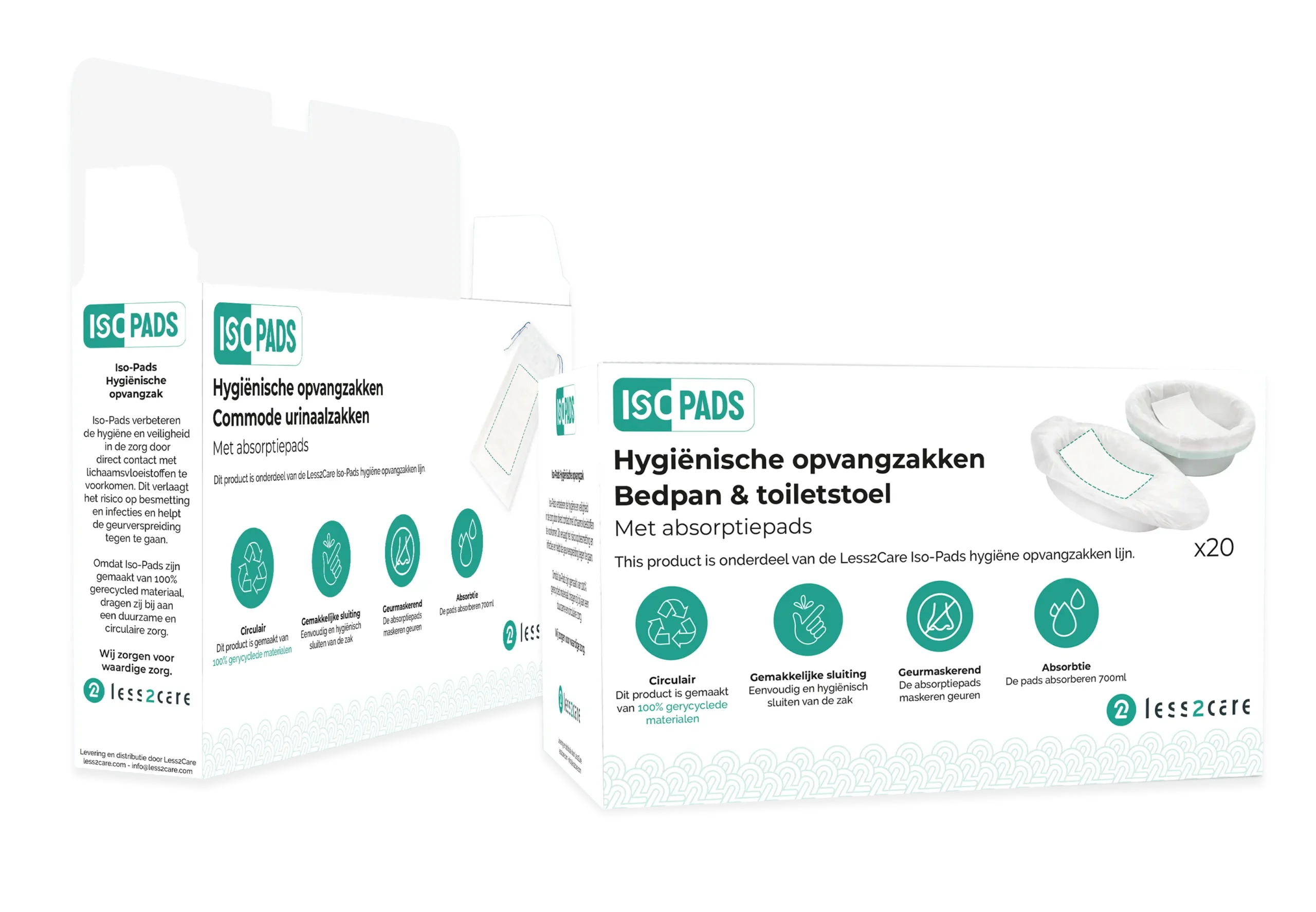
Two liners, one routine
- Bedpan and commode liners: for bedpans and commode chairs
- Urinal liners: drawstring liners for urinals
Where Iso-Pads fit
Iso-Pads are the first step in the Less2Care system. Once closed, the liner goes into the Iso-Safe with other continence waste, and is sealed in the Iso-Bag by the Iso-Air before it leaves the unit.
Commode, bedpan and urinal liners for care homes
Bedpans, commodes and urinals are part of everyday life in most care homes and nursing homes. For residents who can’t easily get to the toilet, or who need support at night, they’re essential for comfort and independence. The difficult part usually comes afterwards.
Without a liner, every bedpan, commode pan or urinal has to be carried to the sluice, emptied, rinsed and put through the bedpan washer or macerator. That’s a walk down the corridor with an open container, and a real risk of splashes for the carer doing it.
Iso-Pads change that routine. The liner goes on before use. The absorbent pad turns liquid into gel, so there’s nothing to pour away. When care is finished, the drawstring closes the liner and it goes straight into the Iso-Safe beside the resident. The waste is contained from the start.
Less pressure on the sluice, the bedpan washer and the macerator
Sluice rooms in many homes were designed for a different era of care. Bedpan washers and macerators rely on water and power, need regular servicing, and when one breaks down, the whole unit feels it.
Because Iso-Pads turn liquid into gel and are sealed away with other continence waste, far less needs to go through the sluice in the first place. That can take pressure off ageing equipment, and gives teams a reliable routine for the times when the macerator or bedpan washer is out of action.
Iso-Pads don’t replace your sluice, and they’re not meant to. They give your team another way of working that keeps waste contained and dignity intact.
Read more: When the macerator breaks down: practical alternatives for care homes
Supporting dignity and infection prevention
Using a commode or bedpan can already feel exposed for a resident. Knowing the waste is closed away straight afterwards, rather than carried through the home, matters.
For staff, less direct contact with bodily fluids and fewer splashes support good infection prevention and control practice, and make a hard job a little easier. Because the routine is the same on every shift, it’s simple for permanent, agency and new staff to follow.
At a glance
What Iso-Pads bring to everyday care.
- Absorbs up to 700ml
- Turns liquid into gel, reducing the risk of spills and splashes
- Absorbent pad helps mask odour
- Drawstring closure for simple, hygienic sealing
- Less direct contact with bodily fluids
- Liners for bedpans, commode chairs and urinals
- Made from 100% recycled materials
- Boxes of 20
- Disposed of in the same sealed Less2Care process
Questions care teams ask
Practical answers about Iso-Pads for care homes and nursing homes.
What types of Iso-Pads are there?
There are two: liners for bedpans and commode pans, and drawstring liners for urinals. Both have a built-in absorbent pad. If you’re not sure they’ll suit the equipment you already use, we’ll check with you during our site visit.
How much liquid can an Iso-Pad absorb?
Up to 700ml. The pad turns liquid into gel, which reduces the risk of spills and splashes when the liner is closed and moved.
Do used Iso-Pads go through the macerator?
No. Iso-Pads are designed to be closed with their drawstring and sealed away with your other continence waste in the Iso-Bag, rather than emptied or macerated.
Which waste stream do used Iso-Pads go in?
They go into the Iso-Bag with your other continence waste, so they follow the offensive or infectious waste stream your home already uses. We’d recommend a quick conversation with your waste contractor, and we’re happy to help with that.
What are Iso-Pads made from, and how are they supplied?
Iso-Pads are made from 100% recycled materials and come in boxes of 20.
The rest of the system
Each part works with the others to keep continence waste contained, from the bedside to the bin store. See the full Less2Care system
Iso-Bag: sealed, not porous
Airtight, watertight bags that keep odour and waste contained. Explore Iso-Bag
Iso-Safe: collection at the point of care
A foot-operated collector at the resident’s door. Explore Iso-Safe
Iso-Air: removes air and seals
Removes the air, filters it and seals the bag for compact storage. Explore Iso-Air
Where to start
The most useful first conversation isn’t about equipment. It’s about the route a used pad takes through your home, and what that means for your residents and your team.
If Less2Care is the right answer, we’ll show you how it works. If it isn’t, we’ll say so.