The new CQC adult social care framework: what it means for care homes in practice

The framework is changing. Good care isn’t.
If you’re a registered manager, you’ve probably spent the last two years getting to grips with the Single Assessment Framework, its 34 quality statements and its scores. Now it’s changing again.
The good news is that the direction of travel is one many in the sector asked for. Adult social care is getting a framework of its own, built around how care actually works, rather than sharing one with hospitals, GP practices and dentists.
Here’s what’s changing, where things stand, and what it means for the evidence you gather day to day.
What’s changing
- Four sector-specific frameworks will replace the Single Assessment Framework, with one dedicated to adult social care.
- The five key questions stay the same: safe, effective, caring, responsive and well-led. So do the four ratings.
- The 34 quality statements are being replaced by 24 key lines of enquiry in the draft adult social care framework: six for safe, six for effective, three for caring, four for responsive and five for well-led.
- Numerical scoring of evidence is being removed.
- Rating characteristics are returning, describing what outstanding, good, requires improvement and inadequate look like in adult social care.
Where things stand
CQC published the draft frameworks in March 2026. The consultation on the adult social care framework closed on 12 June 2026, with more than 1,700 responses. Pilots ran from June to October 2026, with a final evaluation in November.
At the time of writing, CQC hasn’t confirmed the date the new adult social care framework takes effect, only that it’s expected later this year. Until then, services continue to be assessed under the Single Assessment Framework. It’s worth keeping an eye on CQC’s website and provider updates for confirmed dates and final guidance.
What stays the same
It’s easy to feel that everything is changing. In practice, much of what you know still applies.
- The five key questions: safe, effective, caring, responsive and well-led.
- The four ratings: outstanding, good, requires improvement and inadequate.
- The “I statements”, which describe what good care feels like from the point of view of the person receiving it.
- The regulations themselves. The framework sets out how CQC assesses services. The legal requirements underneath it, including fit and proper person requirements and safe recruitment, haven’t changed.
So the work you’ve done to understand people’s experience and strengthen governance still counts. It’s the way it’s assessed that’s changing.
What it means day to day
Frameworks change. What good care looks like doesn’t. Inspectors will still want to understand people’s experience of care, how safe and responsive it is, and how well the service is led.
What the changes do is shift the emphasis back towards clear, sector-specific descriptions of good care. That rewards services that can show their everyday practice simply and honestly, rather than those that are best at assembling evidence for an inspection.
For most homes, the question isn’t “what do we need to change?” It’s “can we show the care we already give?”
What rating characteristics mean in practice
Under the Single Assessment Framework, evidence was scored category by category, and those scores added up to a rating. Many providers found that hard to follow, and it could feel as though ratings depended on paperwork rather than practice.
In the draft framework, scoring is removed. Ratings are made at the level of each key question, using professional judgement informed by evidence, with rating characteristics describing what each rating looks like in adult social care.
For care homes, that means:
- Consistency matters more than volume. A clear, everyday picture is more persuasive than a large file put together for the visit.
- People’s experience sits at the centre. What residents, families and staff say carries real weight.
- Leaders need to show they know their service: where the risks are, what’s improving and what they’re doing about it.
Where good evidence comes from
Much of the best evidence already sits in your records, your conversations with families and your team’s knowledge of the people they support. The challenge is usually pulling it together when it matters.
Used well, technology can help with that. Not by replacing judgement or adding paperwork, but by quietly recording what’s already happening:
- Safe: when falls or bed exits happen, how quickly staff respond, and patterns that might be missed overnight.
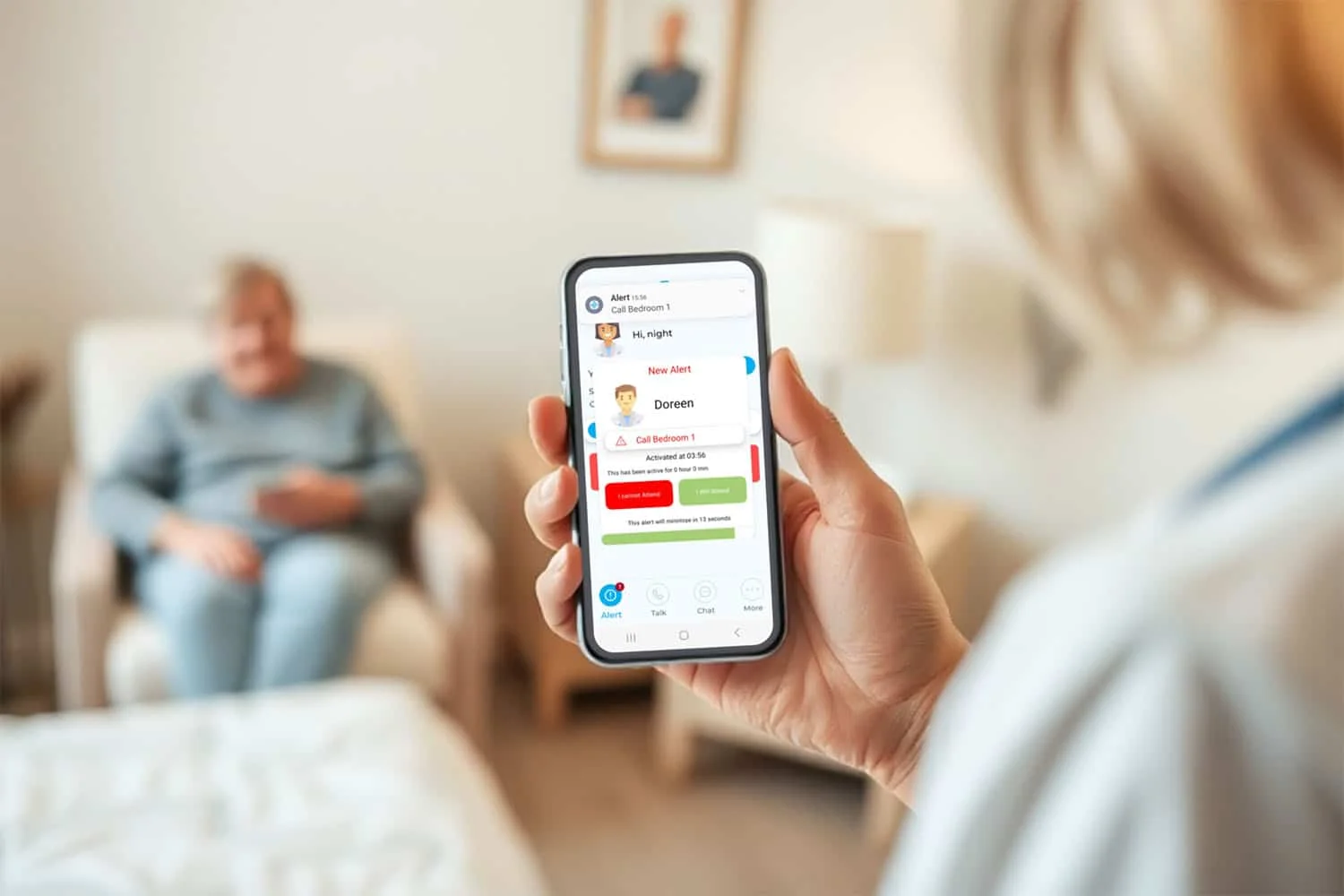
- Responsive: how quickly calls for help are answered, and how escalation works in practice.
- Caring: privacy-first approaches that protect dignity, such as monitoring without cameras or wearables.
- Effective: wellbeing, engagement and meaningful moments, not just completed tasks.
- Well-led: trends over time that help leaders spot risk early and show how they’ve acted on it.
The point isn’t to buy technology for an inspection. It’s to choose tools that support safer, calmer care every day, and that happen to make good practice easier to evidence.
Why night-time evidence matters
Nights are often the hardest part of care to evidence. There are fewer staff, fewer visitors and less activity, and much of what happens isn’t seen by anyone other than the night team.
Yet many of the questions inspectors care about apply just as much at 3am as at 3pm. Are people safe? Are calls for help answered promptly? Are falls noticed quickly, and are people helped up without delay? Is sleep protected, rather than disturbed by unnecessary checks?
If your evidence for nights relies on handwritten check sheets alone, it’s worth asking whether it truly reflects the care your team gives. Our guide to night-time care looks at this in more detail.
Practical steps to prepare
- Read the draft adult social care framework and the rating characteristics, and share them with your team.
- Map the evidence you already have against the five key questions. Look for gaps, particularly at night.
- Check how easily you can pull together information on falls, response times and wellbeing when you need it.
- Involve staff early, so the changes feel like a description of their work rather than another layer of compliance.
- Review systems that create noise or admin without adding insight.
Frequently asked questions
When does the new CQC framework start?
CQC hasn’t confirmed a date yet. Pilots ran from June to October 2026, with a final evaluation in November, and CQC has said it expects the new adult social care framework to take effect later this year. Until then, services are assessed under the Single Assessment Framework.
Will my current rating change?
Not because the framework changes. Your rating stays in place until your service is next assessed. CQC is also returning to some services rated good some time ago, to check the rating still reflects the care being given.
What are KLOEs?
Key lines of enquiry are the questions inspectors use to explore each of the five key questions. The draft adult social care framework has 24 of them, replacing the 34 quality statements. CQC’s website has the current wording.
Is scoring being removed?
Yes, in the draft framework. Ratings would be made at key question level using professional judgement, guided by rating characteristics that describe what each rating looks like.
Do we need new technology to prepare?
No. The framework doesn’t require any particular technology. What matters is being able to show safe, responsive, person-centred care. Technology can help where it makes that easier to see, particularly at night, but it should be chosen for the difference it makes to people, not for an inspection.
How Spark Care can help
At Spark Care, we work alongside care providers to make evidence part of everyday care, not an extra task. That includes fall detection that respects privacy, modern nurse call and communication tools, and ways of evidencing wellbeing and meaningful outcomes, all supported by practical help with implementation.
If you’d like to talk through how your current systems support the new framework, book a consultation. We’ll help you see where you’re already strong and where small changes could make a real difference.
Sources: Care Quality Commission provider updates, March 2026; draft adult social care assessment framework, March 2026. Timings checked November 2026.